Mount Kanchenjunga: The Five Treasures of Snow
Introduction
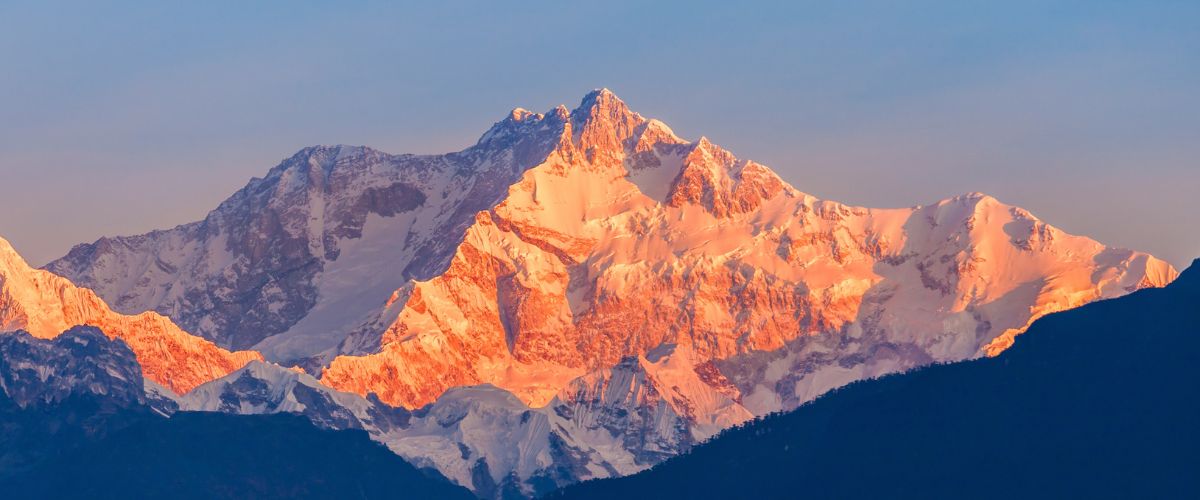
Mount Kanchenjunga, often spelled Kangchenjunga, is the third-highest mountain in the world, standing tall at 8,586 meters (28,169 feet) above sea level. It is located on the border between Nepal and the Indian state of Sikkim, in the eastern Himalayas. Kanchenjunga is not just a geographical wonder but also a symbol of spirituality, culture, and natural beauty for the people who live around it.
The name Kanchenjunga comes from the Tibetan words “Kang-chen-dzö-nga,” which means “The Five Treasures of Snow.” These treasures are believed to represent gold, silver, gems, grain, and holy books, symbolizing the five repositories of God’s blessings.
Geographical Location
Mount Kanchenjunga lies about 125 kilometers (78 miles) east-southeast of Mount Everest. It is part of the Himalayan mountain range and is shared by Nepal’s Taplejung District and Sikkim in India. The mountain is surrounded by deep valleys and glaciers such as the Zemu Glacier in Sikkim and the Yalung Glacier in Nepal.
The Kanchenjunga region is one of the most pristine and least disturbed high-altitude ecosystems in the world. It is protected by the Kangchenjunga Conservation Area in Nepal and the Khangchendzonga National Park, a UNESCO World Heritage Site, in India.
The Five Peaks of Kanchenjunga
Mount Kanchenjunga is not a single peak but a massive mountain massif with five distinct summits:
-
Main Kanchenjunga (8,586 m) – the highest point.
-
West Kanchenjunga or Yalung Kang (8,505 m).
-
Central Kanchenjunga (8,482 m).
-
South Kanchenjunga (8,494 m).
-
Kangbachen (7,903 m).
These five peaks are what give Kanchenjunga its name — the “Five Treasures of Snow.” Together, they form one of the most spectacular mountain groups in the world.
Discovery and Early Exploration
In the early 19th century, Kanchenjunga was believed to be the highest mountain in the world. British surveyors from the Great Trigonometrical Survey of India first measured its height in 1849. Later, when Mount Everest was more accurately measured, Kanchenjunga was recognized as the third-highest.
The first serious attempts to climb the mountain began in the early 20th century. Many expeditions faced challenges due to unpredictable weather, difficult terrain, and the mountain’s remote location.
First Ascent
Kanchenjunga was first climbed on May 25, 1955, by George Band and Joe Brown, members of a British expedition led by Charles Evans. However, following local religious beliefs, the climbers did not step on the actual summit; instead, they stopped a few feet below the top to honor the sacredness of the mountain.
Since then, most climbers have respected this tradition by not standing on the true summit.
Religious and Cultural Significance
For the people of Sikkim and eastern Nepal, Kanchenjunga is a sacred mountain. It is considered the abode of deities that protect the region. In Sikkim, the mountain is worshipped as a guardian deity, and it features prominently in local festivals, rituals, and art.
The Limbu people of eastern Nepal believe Kanchenjunga is home to Yuma Sammang and Paruhang, important deities in their religion. In Tibetan Buddhism, the mountain is regarded as one of the five great treasures of the snow.
Because of these beliefs, Kanchenjunga has been protected from over-commercialization, unlike other Himalayan peaks such as Everest.
Flora and Fauna
The Kanchenjunga region is a biodiversity hotspot. Its ecosystem ranges from subtropical forests to alpine meadows and glacial zones. Some of the rare species found here include:
-
Snow Leopard
-
Red Panda
-
Himalayan Black Bear
-
Musk Deer
-
Himalayan Monal (Impeyan Pheasant) — Nepal’s national bird
The forests are rich in rhododendrons, orchids, magnolias, and pine trees, creating a stunning landscape, especially during springtime.
Trekking and Tourism
Trekking to Kanchenjunga offers one of the most remote and authentic Himalayan experiences. The Kanchenjunga Base Camp Trek in Nepal is known for its scenic beauty, cultural richness, and unspoiled wilderness.
Unlike the Everest or Annapurna regions, Kanchenjunga sees fewer tourists, which makes it ideal for adventurers seeking solitude.
Popular routes include:
-
Kanchenjunga North Base Camp Trek (via Pangpema)
-
Kanchenjunga South Base Camp Trek (via Yalung Glacier)
Trekking permits are required, and trekkers must go with a registered guide as the area lies within a restricted zone.
Environmental Challenges
Despite its isolation, Kanchenjunga faces threats from climate change. Melting glaciers, unpredictable weather patterns, and biodiversity loss are emerging concerns. Conservation organizations and local communities are working together to protect the fragile ecosystem through sustainable tourism and eco-friendly practices.
Conclusion
Mount Kanchenjunga stands as a symbol of majesty, mystery, and spirituality. Its snow-capped peaks and untouched beauty inspire awe and reverence. More than just a mountain, it represents the harmony between nature and culture, a reminder that some places on Earth are meant to be respected as sacred rather than conquered.
Kanchenjunga continues to capture the imagination of climbers, scientists, and pilgrims alike — a true “Treasure of Snow” that shines as a jewel of the Himalayas.
Comments
Post a Comment